Best Exterior Paint Colors for Ranch Homes
Ranch homes sit low and wide, hugging the landscape with horizontal lines that demand colors working with the elongated silhouette rather than against it. The attached garage, wide front face, and minimal ornamentation mean your color palette is the primary source of curb appeal — there's no crown molding or elaborate trim to do the heavy lifting.
What Makes Ranch Homes Unique
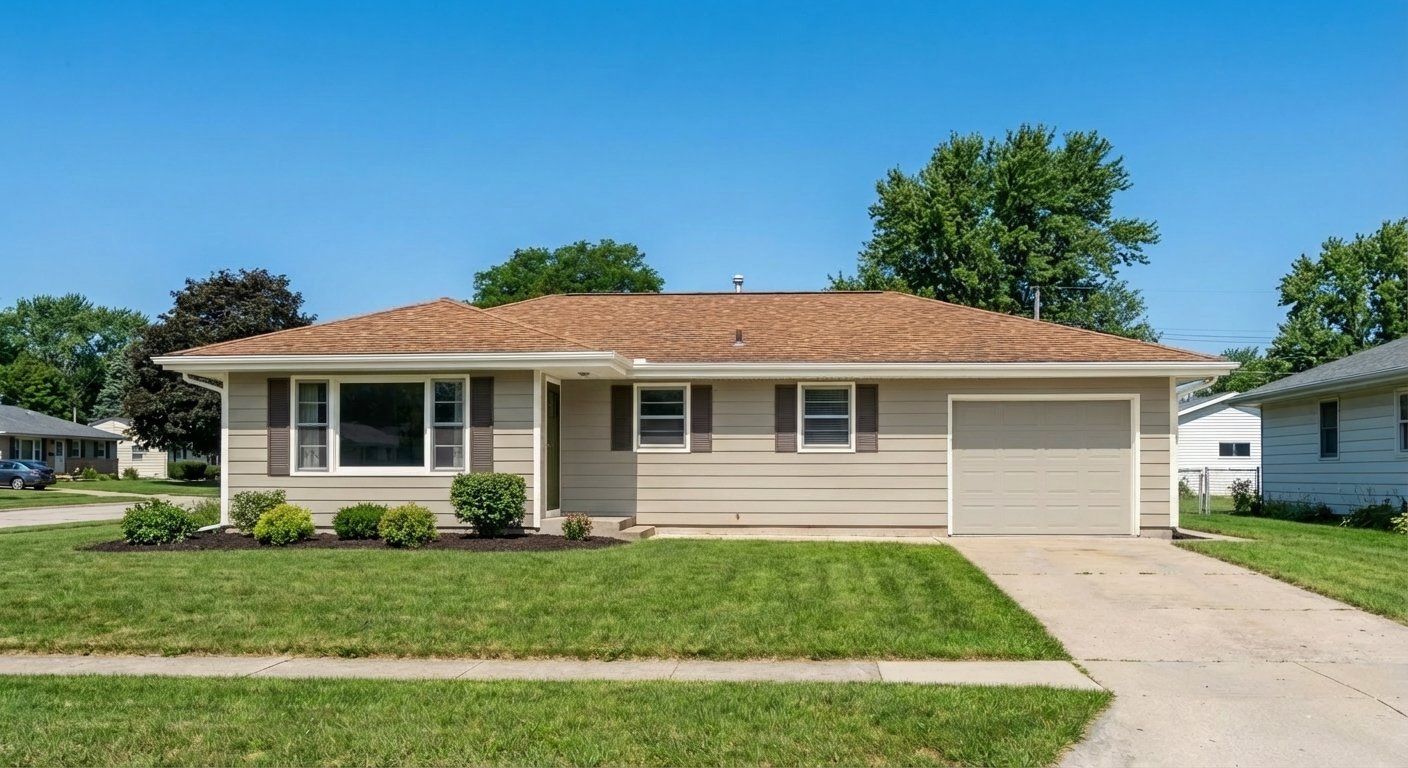
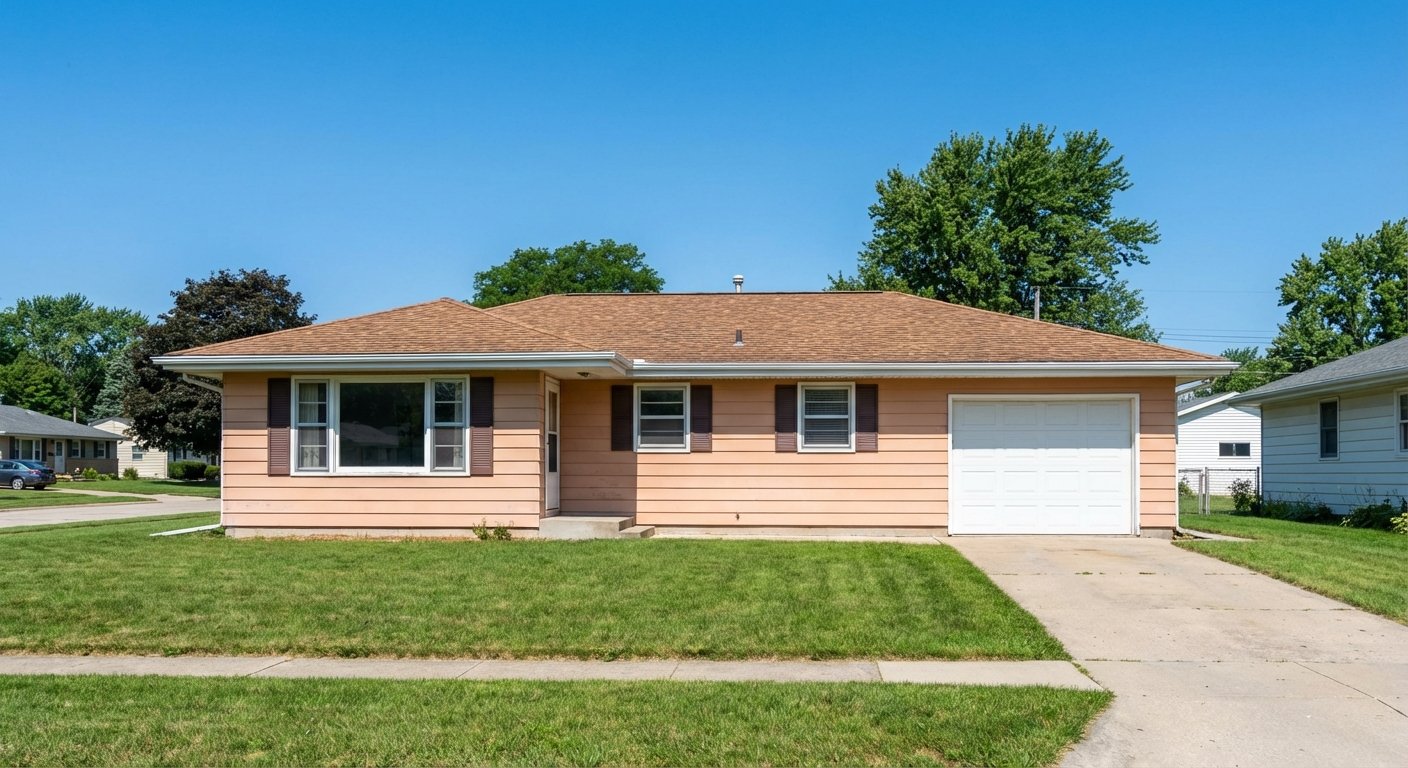
Ranch homes emerged in the 1950s–70s as America's quintessential suburban house. Their single-story, ground-hugging profile features a low-pitched roof with deep eaves, an asymmetrical front facade, large picture windows, and an attached garage that often dominates the front elevation. Common materials include brick veneer, wood or vinyl siding, and sometimes a combination of both on the same facade. The wide, unbroken wall planes and minimal trim detail mean color choices have enormous visual impact — a Ranch has more visible siding per square foot of facade than almost any other style, so the body color truly becomes the house's personality.
Top Color Palettes for Ranch Homes
Earthy Ranch
Pewter Green channels the organic, landscape-integrated look that Ranch homes were designed for. This deep sage reads as natural and grounded against lawns and mature landscaping. Shoji White trim keeps the overall feel warm without the starkness of pure white, while Cavern Clay on the door nods to the earthy mid-century palette these homes were born into.
Try on your houseDesert Ranch
This warm, sun-baked palette brings out the best in Ranch homes in arid or suburban settings. Latte provides a sandy warmth that makes the wide facade feel inviting, and Urbane Bronze on the door adds weight without going black. Java on the garage door keeps the large expanse from drawing attention away from the entry. Two to three colors — exactly what a Ranch does best.
Try on your houseModern Ranch
Gauntlet Gray bridges the gap between mid-century roots and modern taste. It's warm enough to avoid looking cold on a long, low facade, and dark enough to feel intentional and current. Tricorn Black on the front door and fascia adds a contemporary edge, while Pewter Green as a planter or accent color keeps the scheme from going monochromatic. This is the palette for Ranch owners who want a modern update without a full renovation.
Try on your houseClassic Ranch
The no-risk, always-right Ranch palette. Accessible Beige is forgiving on large wall planes — it hides minor imperfections and shifts gracefully through different lighting conditions. Dover White trim blends rather than pops, keeping the horizontal lines smooth and uninterrupted. The Roycroft Bronze Green door adds just enough character to prevent the palette from feeling bland.
Try on your houseColors to Avoid on Ranch Homes
The long, low Ranch profile becomes a featureless white slab in bright white. Ranches lack the trim details and vertical elements that make white work on Colonials or Farmhouses — a white Ranch just looks blank. If you want light, choose a warm off-white like Shoji White or Alabaster instead.
Ranch homes were designed for simplicity — four or five different accent colors fight the clean horizontal lines and make the house look cluttered and confused. Stick to two or three colors maximum. The beauty of a Ranch is its streamlined silhouette; too many colors chop it up.
Dark body colors visually shrink the house, and since the garage door is already the dominant feature on most Ranches, a dark color amplifies this imbalance. If you want a dark body, consider painting the garage door a shade lighter than the siding to minimize its visual weight.
Tips for Choosing Colors for Your Ranch Home
- Use your wide front face as an asset, not a liability. A rich, saturated body color like Pewter Green or Urbane Bronze turns all that visible siding into a bold statement — don't dilute it with too many accent colors.
- Pay attention to your roof color. Ranches have proportionally more visible roof than taller homes, so roof-to-siding coordination matters more here. Warm earth-tone siding paired with a cool gray roof creates an unintentional clash that's hard to diagnose from the ground.
- Consider painting the garage door to match the body or trim — not as a third color. The garage is already the biggest visual element on most Ranches, and making it a contrasting color only draws more attention to it.
- If your Ranch has a brick wainscot or partial brick facade, treat it as a fixed color you can't change. Pull your siding and trim colors from the brick's undertones — warm brick needs warm siding, cool brick needs cool siding.
See these colors on your Ranch home
Upload a photo of your house and preview any of these palettes in under 30 seconds — free.
Try PaintVue FreeFrequently Asked Questions
What colors make a ranch house look more modern?
Should I paint my ranch house one color or two?
What exterior colors hide imperfections on ranch homes?
How do I make my ranch house look bigger?
What color should I paint my ranch house garage door?
Explore Ranch Color Palettes
See Also
Best Colors for Colonial Homes · Best Colors for Craftsman / Bungalow Homes · Best Colors for Split-Level Homes · Best Colors for Cape Cod Homes · Best Colors for Mid-Century Modern Homes · Best Colors for Farmhouse Homes · Best Colors for Contemporary Homes · Best Colors for Tudor Homes · Best Colors for Mediterranean Homes