Best Exterior Paint Colors for Mediterranean Homes
Mediterranean homes are built around warm stucco walls, terracotta tile roofs, and wrought-iron details — a material palette that demands equally warm, sun-drenched paint colors. The stucco body should feel like sun-baked plaster in cream, tan, or sandy beige, with accent colors drawn from the sea, tile, and ironwork that define the style.
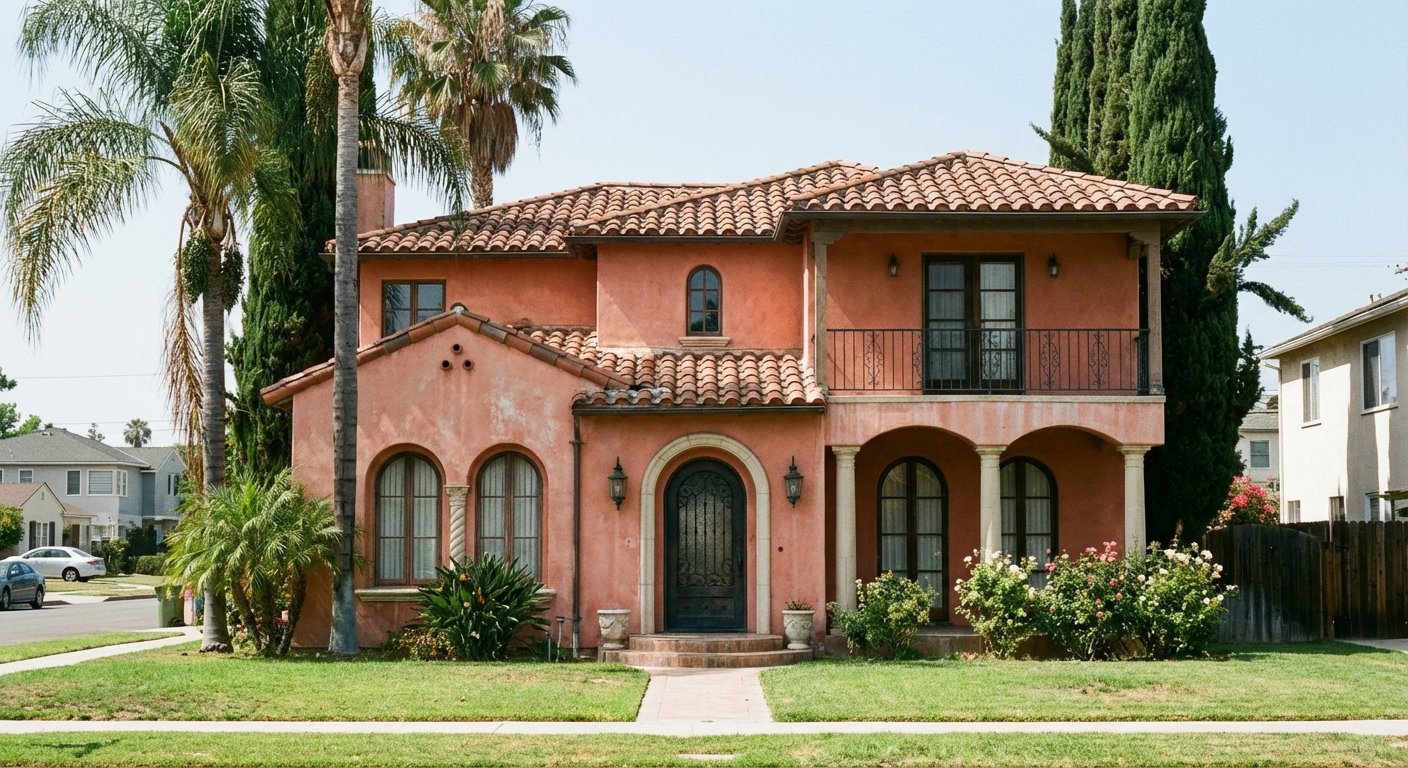
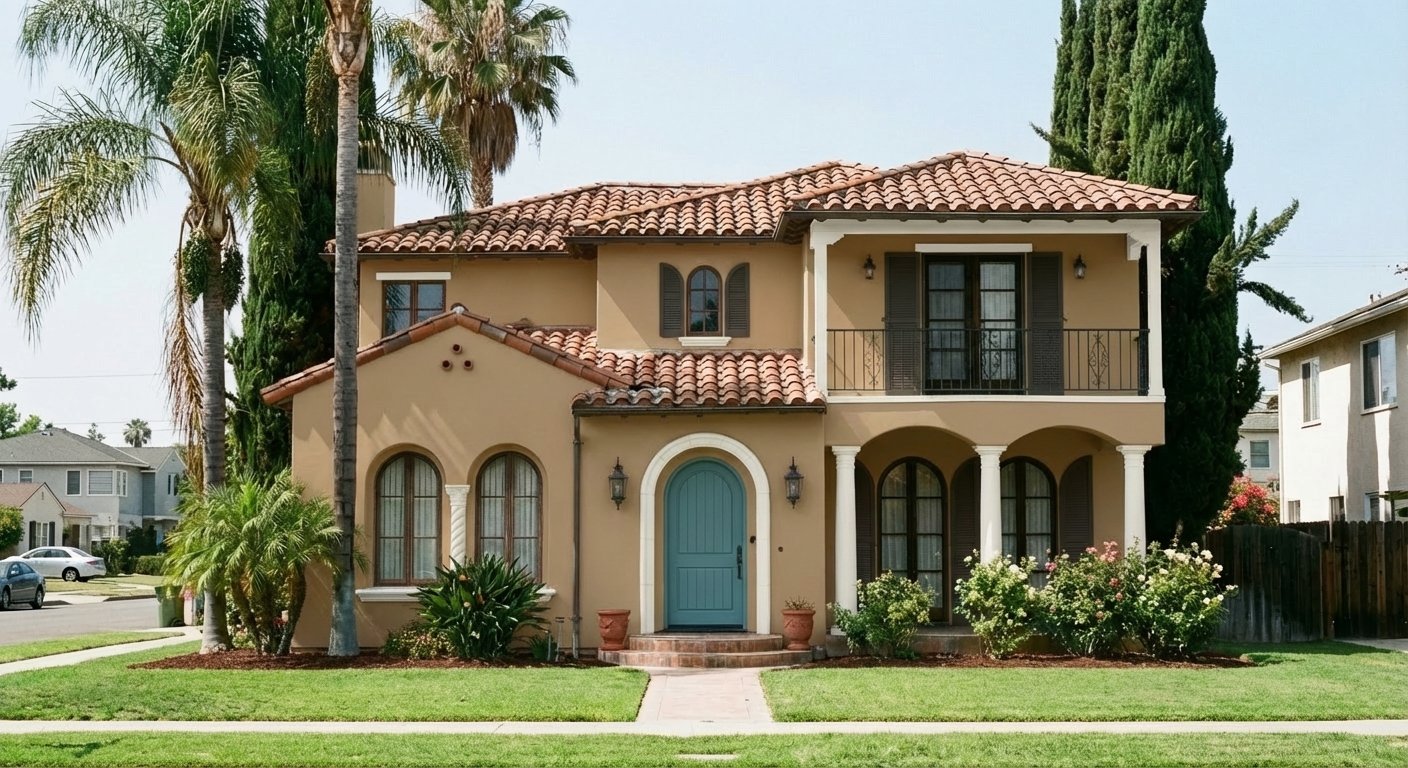
What Makes Mediterranean Homes Unique
Mediterranean Revival homes draw from Spanish Colonial, Italian Renaissance, and Moorish architectural traditions, and were built extensively in Florida, California, and the Southwest from the 1920s onward. The hallmarks are low-pitched terracotta tile roofs (barrel or S-tile), smooth or textured stucco exterior walls, arched windows and doorways, ornamental wrought-iron balconies and railings, and courtyards or covered loggias. The terracotta roof is the dominant fixed element — its warm red-orange tone establishes the palette ceiling that every paint color must work beneath. Stucco walls provide the large color field, and their textured surface catches light and shadow in ways that flat siding doesn't, making color selection particularly sensitive to time of day and orientation. Accent colors appear on ironwork, shutters, the front door, and sometimes decorative tile insets.
Top Color Palettes for Mediterranean Homes
Classic Mediterranean
Latte is the quintessential Mediterranean stucco color — a warm sandy tan that looks like it's been absorbing sunlight for decades. Dover White trim softens the window and arch details without introducing a cold contrast. Iron Ore on the railings and shutters evokes the aged wrought iron that defines Mediterranean detailing. The Reflecting Pool door introduces a turquoise accent that nods to the sea and the decorative tile tradition.
Try on your houseWarm Stucco
Kilim Beige is a shade warmer and richer than Latte, pushing the stucco into golden territory that pairs naturally with the terracotta roof above. Alabaster trim is clean without being stark, and the Urbane Bronze shutters and ironwork are a warmer alternative to Iron Ore's cooler charcoal. The Fireweed door is a muted, earthy red that harmonizes with the terracotta roof tiles rather than competing with them.
Try on your houseCoastal Mediterranean
Accessible Beige is the lightest of the warm stucco options — it keeps the Mediterranean feeling airy and coastal rather than heavy and inland. Extra White trim creates a crisper, more modern contrast on the arched windows and cornices. The Watery door is a soft blue-green that evokes the Mediterranean coast itself — subtle enough to complement the warm stucco without the intensity of a saturated blue.
Try on your houseTuscan Villa
Roycroft Vellum is the warmest cream option — it's golden and rich, evoking the sun-baked walls of an Italian villa. This is the body color for Mediterranean homeowners who want unapologetic warmth. Java on the shutters and ironwork is a deep chocolate brown that's warmer and more organic than black, tying to the natural wood and rustic iron details of the Tuscan tradition. The Rookwood Dark Green door completes the villa palette with a color pulled straight from cypress groves.
Try on your houseColors to Avoid on Mediterranean Homes
Colors like Repose Gray, Passive, and Silvermist clash with the warm terracotta roof that dominates every Mediterranean home. Cool stucco under a warm roof creates a visual temperature fight — the house looks confused about what it's trying to be. Mediterranean stucco must stay in the warm family: cream, tan, beige, or golden.
Pure white or Extra White as a full body color on a Mediterranean home reads as modern minimalist, not Mediterranean Revival. The style's character comes from warm, slightly aged-looking stucco — the kind of surface that looks like it's seen a hundred summers. Bright white erases that warmth and makes the terracotta roof look tacked-on rather than integral.
True black (Tricorn Black) on Mediterranean ironwork and shutters looks too modern and graphic for the style's rustic character. Mediterranean wrought iron was traditionally finished in dark bronze, dark brown, or a very deep green — never flat black. Use Iron Ore, Urbane Bronze, or Java instead. The warmth of these dark browns and bronzes is what makes the metalwork feel hand-forged rather than factory-made.
Tips for Choosing Colors for Your Mediterranean Home
- Start with the roof. The terracotta tile roof is the largest fixed color on a Mediterranean home and the single biggest constraint on your palette. Hold your stucco samples directly against the roof tiles — if the undertones fight (cool stucco under warm terra-cotta), the entire exterior will look off.
- Stucco texture changes how colors read. Smooth stucco shows color more truly, while heavy knockdown or skip-trowel texture creates tiny shadows that deepen the apparent color by one to two shades. Always test paint samples on your actual stucco surface, not on a smooth board.
- Wrought-iron details are part of the color palette. Railings, window grilles, lanterns, and balcony supports all get painted or refinished — treat them as a coordinated accent color, not afterthoughts. Iron Ore, Urbane Bronze, or Java applied consistently across all ironwork creates a unified look.
- Use decorative tile sparingly but intentionally. Many Mediterranean homes have tile accents at the entry, on stair risers, or around windows. These tiles introduce blues, greens, and yellows that should inform — not match — your door and accent colors. A turquoise door (Reflecting Pool, Watery) near blue-and-white tile creates a cohesive Mediterranean story.
See these colors on your Mediterranean home
Upload a photo of your house and preview any of these palettes in under 30 seconds — free.
Try PaintVue FreeFrequently Asked Questions
What is the best stucco color for a Mediterranean home?
What color door for a Mediterranean house?
How do you paint stucco on a Mediterranean home?
Should Mediterranean shutters match the ironwork?
Can I paint a Mediterranean home gray?
Explore Mediterranean Color Palettes
See Also
Best Colors for Colonial Homes · Best Colors for Ranch Homes · Best Colors for Craftsman / Bungalow Homes · Best Colors for Split-Level Homes · Best Colors for Cape Cod Homes · Best Colors for Mid-Century Modern Homes · Best Colors for Farmhouse Homes · Best Colors for Contemporary Homes · Best Colors for Tudor Homes